

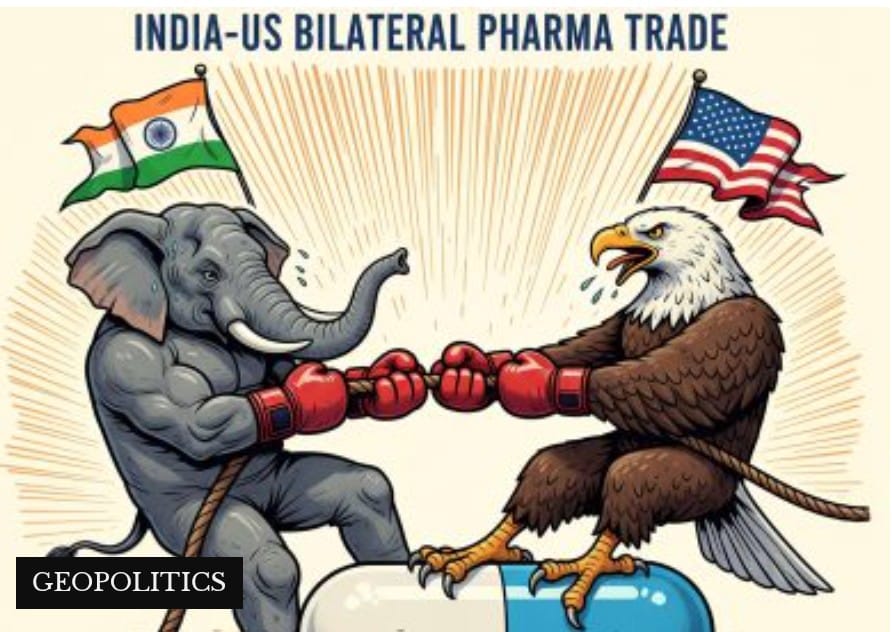
Is it going to be 200 percent retaliatory tariff or 10 percent reciprocal tariff or status quo i.e., none against India and 10 percent for America, in India-US bilateral Pharma trade.
India is a major source of generic pharma products for the United States of America. The US accounts for more than 40 percent – valued at around $9 billion of India’s total generic exports at around $21 billion. India’s has a 12 percent share in America’s cumulative generic imports from the world – at $94.5 billion. Comparatively, India’s pharma imports from America is a miniscule $500 million of which generic/branded category accounts for $200 million. https://www.newscript.co.in/the-quiet-heat-indias-geothermal-gamble-beneath-the-himalayas/America is the biggest exporter of branded/generic pharma products category which is valued at over $33 billion. Paradoxically, and, Ironically, this segment seems to be the crux of discontent in the mindset of the American administration. India’s imports of of pharma product under this category, from the world, is also very low at a little over $1 billion. These figures reflect India’s technological capability and self-sufficiency in terms of economy, production and demand. Presently, while India’s America’s pharma exports is tariff-free, the latter’s exports to the former is subjected 10 percent tariff. America’s pharma trade deficit with India and the world is over $12 billion and $115 billion respectively.
In the past decade, U.S. pharmaceutical imports from the world have more than doubled in value, from $73 billion in 2014 to over $215 billion in 2024, according to U.S. customs data, which reflects the inevitability of dependence.

According to American market experts, the stated rationale is that tariffs would incentivize drugmakers to set up shop in the U.S., create more jobs, and improve national security by reducing reliance on countries who might halt trade in the event of war or other emergency. It’s unclear whether tariffs would achieve these goals.
But if they did take effect, public health experts say they would likely mean higher drug prices and more drug shortages.Manufacturing of finished medicines is going to increase atleast 20 times in the United States itself. Second, India is the cheapest source for formulations and finished dosage forms.https://www.newscript.co.in/tata-powers-2-billion-green-pivot-puts-it-at-the-centre-of-indias-energy-future/ US do not want to set up pharma manufacturing units, in their backyard since it it is the highest polluting industry..moreover the pharma companies are getting medicines are getting inputs at dirt cheap prices i.e., one-tenth of the cost of what it would take for the Companies, if they do it on their own – right from sourcing the raw materials to manufacturing, including manpower, manpower and machinery.

They point out that It’s unclear whether tariffs would achieve these goals. But if they did take effect, public health experts say they would likely mean higher drug prices and more drug shortages.

Tariff disruption of the Trump-kind – whether it is reciprocal or 200 percent, specifically with India, would unleash disruption of destruction-kind and result in dismantling the applecart of well-established supply and marketing ecosystems.( In arrangement with Newscript.co.in)